Blog Posts
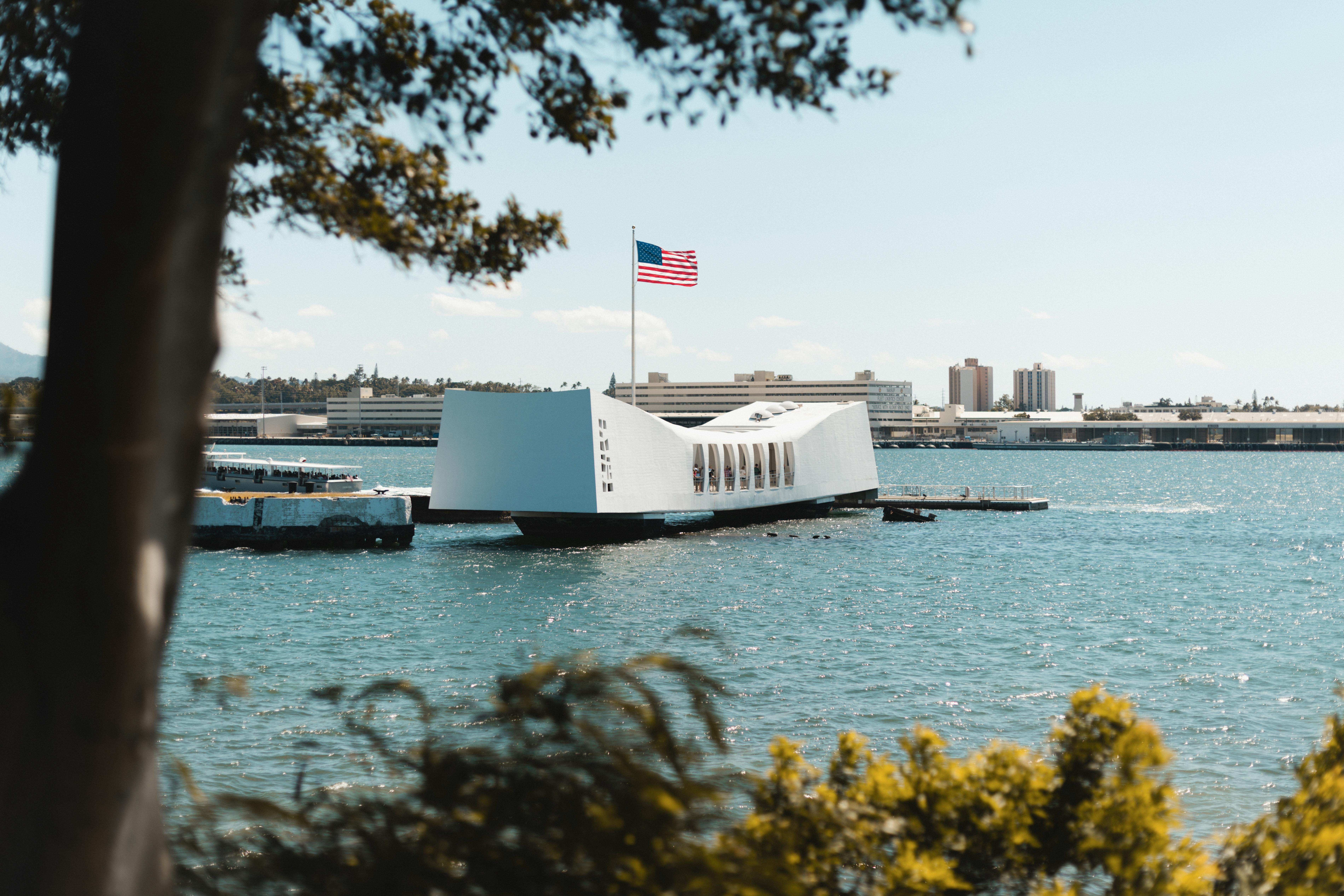 December 04, 2025December 7 1941 0748 Hours
By: Dr. Ken Gemlich
This week, marks the eighty forth, remembrance anniversary of the event that led to America’s entrance into World War 2. When we look at the events of that fateful day, we are left with many un-answered questions. From a national security perspective, one of the most enduring questions is: Was the attack on Pearl Harbor a stroke of Japanese military brilliance or an American defense failure? Inevitably, we can find evidence to support both of those theories. For example, the Japanese planning was meticulous. A network of spies located on O’ahu provided Japanese leadership with American ship movements and harbor layout that proved invaluable in the planning of the attack. By contrast, and as we will see below, the American actions and response appear poorly coordinated and this proved disastrous.
A Little Background
The events that led up to the attack on Pearl Harbor were the results of decades of power struggles in Asia and the Pacific and an increasingly tense diplomatic stalemate between Japan and the United States. Dating back to the invasion of Taiwan in 1895, Japan had gradually expanded its empire in Asia. By December 1941, the Japanese empire already included Taiwan, Korea, Vietnam, Malaysia, and many more South East nations and pacific islands. These territorial acquisitions led to the Second Sino-Japanese War, during which the US supported China against Japan through various sanctions and a war crippling, Oil Embargo. Through diplomatic means, the Japanese demanded that the U.S. end its sanctions against Japan, cease aiding China in the war, and allow Japan to access the resources of the Dutch East Indies—all the while positioning themselves for alternative measures. These events, you might note, are very similar to what happened in Europe during Germany’s seizure of parts of Europe prior to the start of World War 2.
The Players
Let’s look at the players who would command the two sides prior to the attack on December 7, 1941. The Japanese task force was commanded by Admiral Isoroku Yamamoto. Yamamoto, was educated at Harvard University and was later appointed naval attaché to the Japanese embassy in Washington. His experiences convinced him that naval power depended on access to oil and industrial capacity, and that Japan thus had little hope in defeating the industry and natural resources rich U.S. In Yamamoto’s estimation, Japan’s only course of action was to cripple the U.S. Navy in the Pacific so as to allow Japan to expand their influence in Asia and gain access to the necessary raw materials they needed.
The U.S. bases in Hawaii were commanded by General Walter Short, for the US Army forces and Admiral Husband Kimmel, for the US Navy forces and fleet stationed at Pearl Harbor. Each commander had authority over their individual forces, but ultimately still took orders from Washington D.C. Though the commanders were encouraged by their superiors to coordinate efforts to prepare for possible attacks, the communication channels from Washington and through the two branches of the armed forces complicated efforts and inevitably left the base, and the forces stationed there, vulnerable to a surprise attack. Both commanders would be relieved of duty following the attack, though later hearings and proceedings would largely exonerate them both of negligence or dereliction of duty.
How it Played Out
The United States, seeing the strength of Japan’s empire growing throughout Asia, moved their fleet from San Diego to Pearl Harbor as a show of force. This move would ultimately make it possible for Japan to plan a coordinated attack on a large portion of the American fleet without having to cover the distance and risk an attack on the US mainland. Seizing their moment and the element of surprise, the Japanese launched their attack from six aircraft carriers, using 353 aircraft in two waves. Though two key American ships were out on maneuvers, eight battleships of the American fleet were in port with the resulting attack damaging all eight, causing four to sink, and all but the Arizona being raised. Only six of the eight would later return to service. Eleven other ships were damaged with two being sunk, and over 2,400 Soldiers, Sailors, Marines and civilians killed.
The Japanese lost 4 midget submarines sunk, 29 aircraft destroyed, 74 aircraft damaged, and 129 airmen and sailors killed. This attack was a huge victory for the Japanese except that two key American aircraft carriers, the USS Enterprise and the USS Lexington, that were at sea during the attack. The attack was also successful in demonstrating to many Americans that the US had gravely underestimated the Japanese threat and that the US position of neutrality was unsustainable and at a crossroads. The Japanese also benefited greatly from this success and maintained the upper hand in the Pacific for some time after the attack on Pearl Harbor. It took the Americans months and in some cases years to repair the damaged ships and to re-establish naval dominance in the Pacific. Though, it can be argued that the US Navy benefited long term as the immediate need for replacement ships accelerated the rate at which the US launched bigger and more sophisticated aircraft carriers and aircraft.
The Aftermath
Of course, the key event in the aftermath of December 7, 1941, was the US entrance into World War 2. However, days after the attack, calls were also made for an investigation into how and why such an event could have been allowed to occur. To many Americans, it was not just the magnitude of the defeat, but the extraordinary unpreparedness of the U.S. forces in Hawaii. For many, then, someone had to pay.
Over the course of the war, several different investigations were conducted with no clear person or persons responsible for the disaster at Pearl Harbor identified. Ultimately, it was determined that a lack of communication between multiple military branches and the civilian government was the overarching culprit. Due to various breakdowns in communication channels, American leadership lacked a cohesive response to a possible Japanese attack. When the attack came, both Washington and Pearl Harbor were ill-prepared.
Thank you for reading this feature blog which is part of the Madison School of Professional Development Blog Series. Learn more about the MSPD and MSPD Membership.
Dr. Ken has over 29 years experience in the Unites States Army; holds Secret Security Clearance, has earned a Doctorate in Business and a Masters in Homeland Security, and is an unbelievable cook!
 December 17, 2025MEG Partners with Quality Innovations
 June 22, 2026What is Coaching?
 June 29, 2026History of Coaching
 July 07, 2026Coaching as a Modality
 July 15, 2026Why Coaching Matters